Money & budgeting
How to budget for the holidays without debt
December is the most expensive month of the year for many households. Gifts, food, travel, dinners out and end-of-year sales all land at once, and the bill often arrives in January. A holiday budget made before you shop is the simplest way to enjoy the month and still start the new year calm.
Here's a five-step holiday budget plan, a worked example, and a free printable gift budget planner to track every gift.
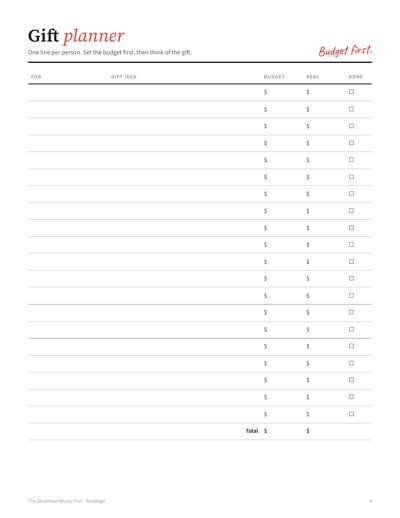
One page, US Letter. One line per person with a budget, the real price and a done box.
Download the free PDF
1. Find your December spending limit
Don't start with a gift list. Start with how much you can actually spend.
Money coming in during December − bills, groceries, debt payments and savings = your limit for extras
| Example | Amount |
|---|---|
| Two paychecks in December | $3,200 |
| Rent, bills, groceries, gas | −$2,350 |
| Debt payment and savings | −$300 |
| Limit for extras | $550 |
That $550 is the whole budget for gifts, food, travel and fun. Example numbers only. Use your own.
2. Split the limit into categories
| Category | Example plan |
|---|---|
| Gifts | $250 |
| Food & hosting | $120 |
| Travel | $80 |
| Going out | $60 |
| Other | $40 |
3. Make a gift list with a budget per person
Write every name first, then give each person a budget so the total matches your gift category. Only then think of the gift. This one habit stops most overspending, because you decide the number before the store or the app does.
- Set a price limit with family or friends, such as $20 or $25.
- Try a gift exchange: everyone buys for one name drawn at random.
- Give time or experiences: a home-cooked dinner, babysitting, a day out.
4. Put paydays and bills on one calendar
Many people overspend in December because a bill arrives right after a big shopping day. Write paydays, bill due dates and plans on one December calendar, and shop only after the bills for that paycheck are covered.
5. Track every purchase, and wait 48 hours on sales
Write each extra purchase with a running total. When a sale tempts you, put the item on a want list and wait 48 hours. If it wasn't on your plan before you saw the sale, it probably doesn't belong in your December budget.
Start January with a check-in
On January 1st, compare what you planned with what you spent. If there's a balance on a card, divide it by your paychecks and pay a fixed amount each payday. A no-buy January can help you catch up faster.
Frequently asked questions
How much should I spend on gifts?
Start from your December spending limit, not from a number per gift. Take your December income, subtract bills, groceries, debt payments and savings, then decide what share of the rest goes to gifts. Divide that by the people on your list.
How do I make a holiday budget?
List the money coming in during December, subtract everything that must be paid, and the rest is your limit for extras. Split it into categories such as gifts, food, travel and going out, then track every purchase against it.
How can I avoid overspending in December?
Set your limit before you shop, write a gift list with a budget per person, wait 48 hours before buying anything that is not on the list, and track spending every day.
What if I already spent too much?
Stop adding new purchases, list what you owe, and make a simple payoff plan per paycheck in January. A short no-buy month can help you catch up faster.
Related: your 2027 money reset and how to stop living paycheck to paycheck.